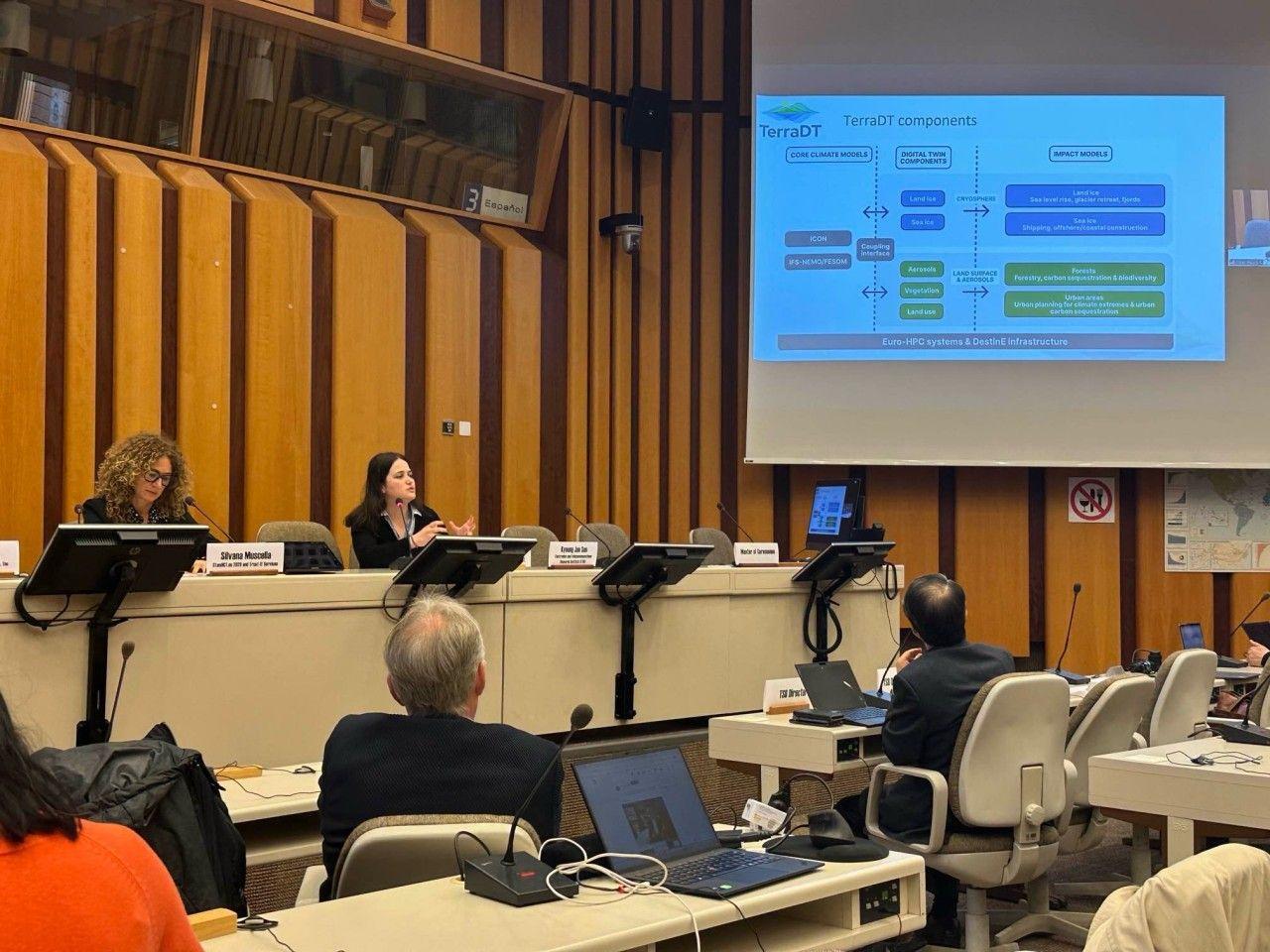
TerraDT was presented at the 3rd UN Virtual Worlds Day and the 2nd Citiverse Assembly, held on 11–12 May 2026 at the International Telecommunication Union headquarters in Geneva, Switzerland. This international event was a valuable opportunity to discuss how virtual worlds, artificial intelligence, spatial intelligence and digital twins can support more sustainable, inclusive and evidence-based urban futures.
Co-organised by the International Telecommunication Union (ITU) together with several UN entities, the World Bank, WIPO and WMO, in partnership with the Global Cities Hub, the 3rd UN Virtual Worlds Day brought together representatives from international organisations, cities, research, industry and policy communities. The discussions focused on the emerging concept of the citiverse and on how AI-enabled, immersive and interoperable digital environments can support cities and communities in addressing complex societal challenges.
The 2nd Citiverse Assembly, organised as part of the Virtual Worlds Day wider programme, focused more specifically on local digital twins, interoperability, standards, data integration and applications of digital technologies in urban contexts. For TerraDT, this setting was particularly relevant because the project is working at the intersection of climate science, digital twin technologies and impact modelling, with the ambition to make advanced climate information more usable for decision-making.
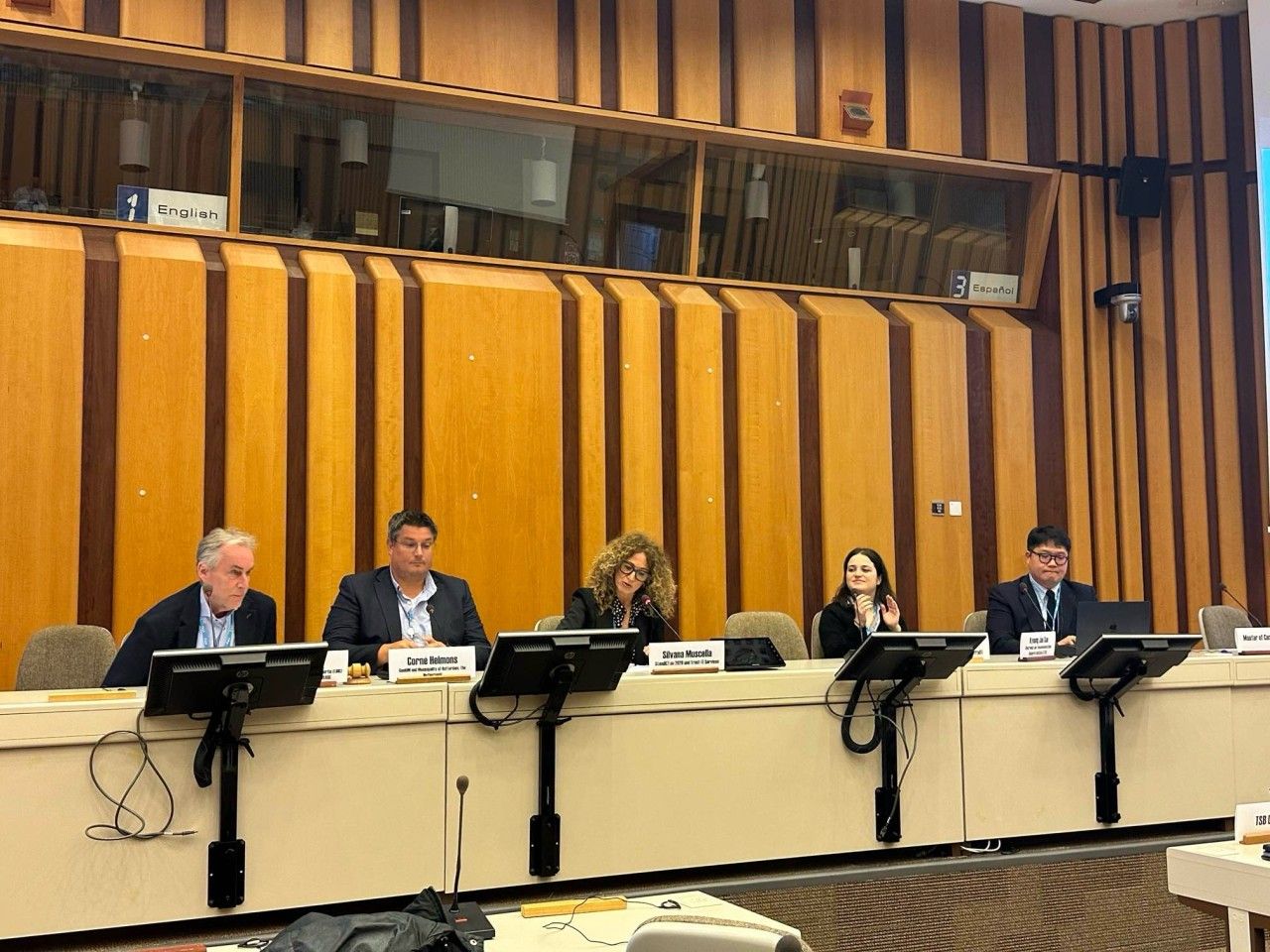
Maria Giuffrida, from Trust-IT Services, represented TerraDT in the panel “Citiverse Projects: A Global Snapshot”. The session provided an overview of ongoing projects on local digital twins and citiverse development across research, industry, academia and cities, highlighting how concrete use cases can help identify the building blocks needed for future citiverse environments.
The TerraDT presentation introduced the project’s contribution to the Destination Earth ecosystem and its work on enhancing climate digital twins through improved Earth system components, modular infrastructure and user-oriented impact models. Particular attention was given to the Urban impact model, which is being developed to support the assessment of climate extremes, urban heat, carbon sequestration and future urban planning scenarios.
The presentation showed how TerraDT can contribute to the citiverse discussion by bringing scientifically robust climate information into urban digital environments. The Urban impact model is designed to help stakeholders explore current conditions and future projections, assess areas vulnerable to temperature extremes, and examine the potential role of nature-based solutions in supporting climate adaptation and mitigation, considering contextual elements such as urban density, proximity to water sources, land composition in different neighboorhoods. In this sense, TerraDT can help bridge large-scale climate modelling with local digital twin applications for cities.
Participation in the event also created an opportunity to position TerraDT within a wider international debate on interoperability, standards and the responsible use of digital technologies for urban governance. As citiverse initiatives evolve, the integration of climate data, Earth observation, AI-based modelling and interactive interfaces will be essential to ensure that digital urban environments are not only visually advanced, but also grounded in reliable scientific evidence.
As next steps, TerraDT will continue to engage with relevant international initiatives and communities working on digital twins, smart sustainable cities, data spaces and standards. The insights gathered in Geneva will inform the project’s ongoing stakeholder engagement activities, including the development of user stories, the refinement of impact model use cases and future discussions on how TerraDT outputs can support city-level climate adaptation and resilience planning.