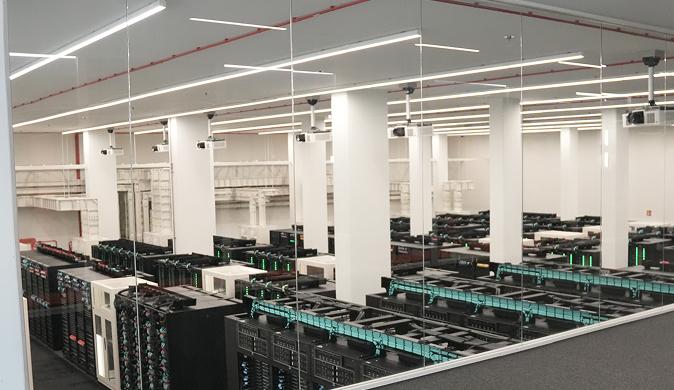
High performance computing refers to computing systems with extremely high computational power that are able to solve hugely complex and demanding problems.(European Commission)
In a data rich world, high performance computing is critical for the advancement of science, but also because of its vast number of applications for the benefits of society, increasing our capacity to design new materials or understand the spread of epidemics.
High-performance computing (HPC) also sits at the core of Europe’s ambition to build accurate, actionable Earth system digital twins. In TerraDT our consortium has access to two of Europe’s most powerful supercomputers: the LUMI supercomputer (hosted at CSC, in Finland) and MareNostrum 5 (hosted at the Barcelona Supercomputing Centre in Spain), and these technologies are enabling a new level of detail and performance in climate modelling.
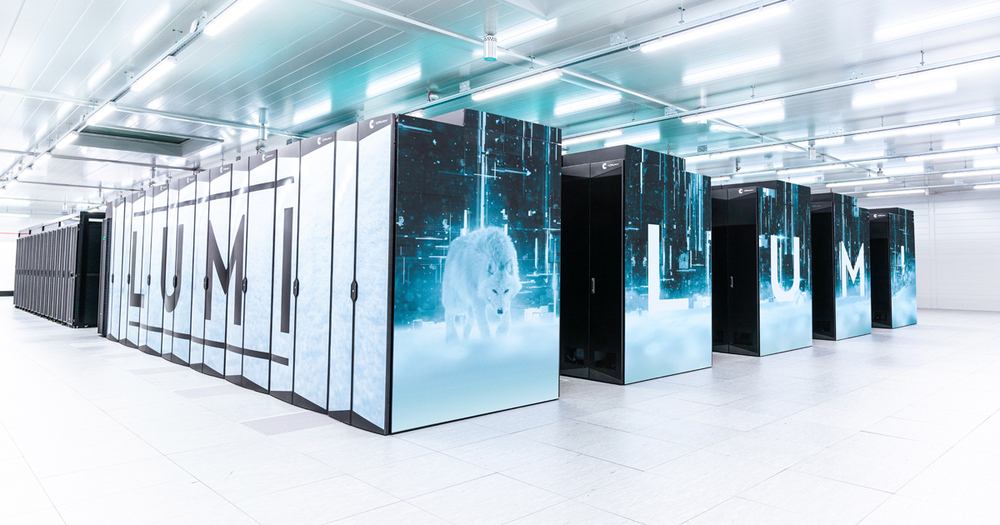
Lumi supercomputer in Kajaani, Finland. (© LUMI Supercomputer Centre)
Interoperable, sustainable km resolution modelling
TerraDT is pushing Earth system simulations towards kilometre-scale resolution, an ambition that requires immense computational power. Systems like LUMI have extreme double-precision computing capacity suitable for both HPC and AI workloads and are able to run complex, data-intensive simulations that integrate atmosphere, land surface, cryosphere and aerosol processes. At the same time, MareNostrum 5 offers a highly versatile HPC environment optimised for being a massive general-purpose multicore system.
With innovative cooling systems and energy efficient infrastructures, both supercomputers exemplify pioneering efforts in green computing, aligning with the EU’s climate targets and contributing to an eco-friendlier technological landscape, ensuring TerraDT’s computational cost does not reflect negatively on the environment.
The combined use of LUMI and MareNostrum 5 also supports the project’s modular architecture. By distributing workloads and testing interoperability across systems, TerraDT is helping to build a flexible, scalable digital twin ecosystem aligned with Destination Earth.
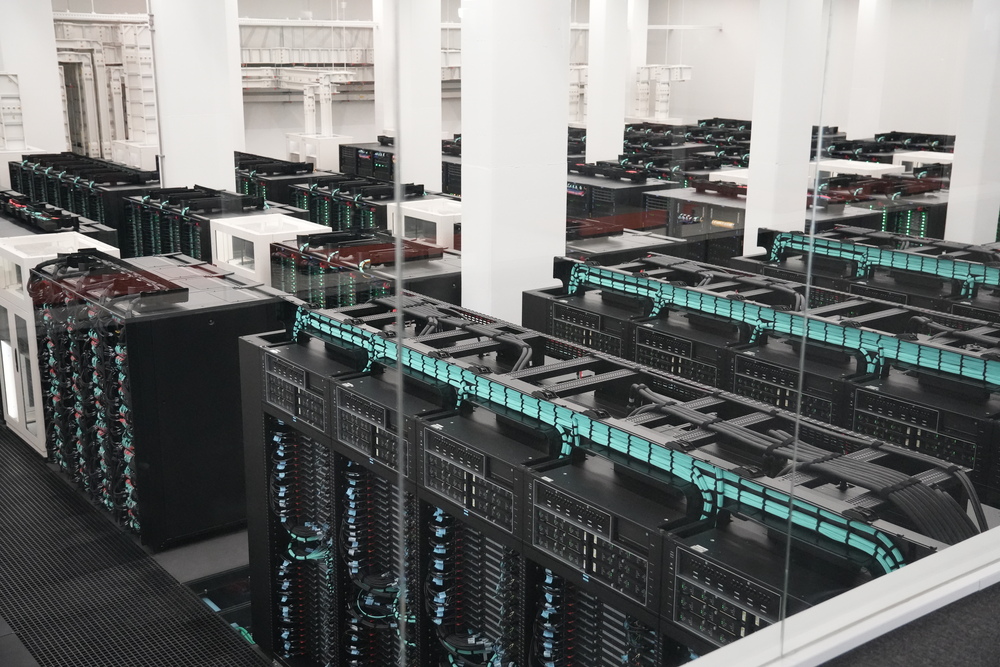
MareNostrum 5, hosted at the Barcelona Supercomputing Center
A European backbone for digital twins
By leveraging Europe’s flagship HPC infrastructures, TerraDT demonstrates how cutting-edge supercomputing can directly support climate adaptation efforts. The ability to simulate Earth system processes with higher fidelity and interactivity brings digital twins closer to operational use. In doing so, it supports policymakers, researchers and stakeholders in navigating climate risks and scenarios with greater confidence.