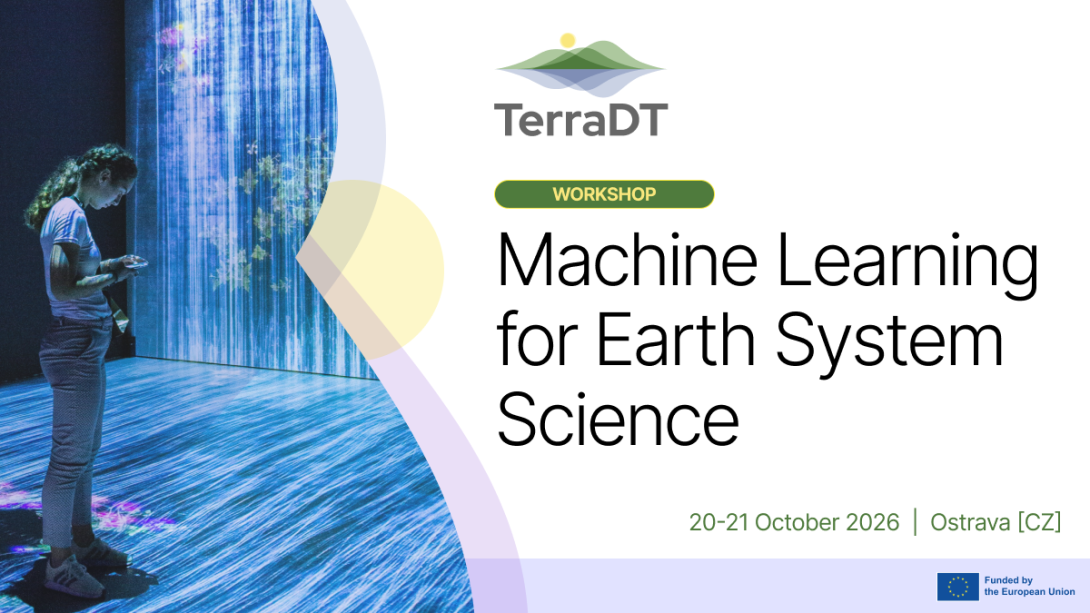
TerraDT is organising an Machine Learning Workshop in Ostrava, on October 20-21, focussed on machine learning (ML) model development on HPC systems and coupling of ML models with numerical simulation methods. Hosted by IT4Innovations National Supercomputing Center (Google maps), the workshop will have hands-on sessions on the first day, working with the MareNostrum 5 (Barcelona Supercomputing Center) and Karolina (IT4Innovations) supercomputers.
Workshop in a nutshell
The workshop is split into two main topics.
The first day will showcase software stacks, efficient container building and deployment, and working with heterogenous HPC systems (training a model in one HPC system, and deploying the model for inference on another system).
The second day focuses on fundamentals of Earth System Model coupling, how to integrate components with Yet Another Compiler (YAC) and Community Interface (ComIn) for ICON processes. On both days, case studies and practical examples will be demonstrated from the TerraDT project, such as AI4Land (global high resolution land use reconstruction), and ML pipeline for model training on aerosol particle precidictions.
Who should attend?
The workshop is designed for consortium partners and sister projects, interested in developing their skills in Machine Learning (ML) models on HPC systems, and coupling of Earth System Models.
REGISTRATION COMING SOON
Coming soon
| Introduction to Coupling in Earth System Models - Fundamental concepts of model coupling - Coupling strategies and architectures - Libraries, frameworks, and integration approaches |
| Integrating Components with YAC and ComIn - Overview of capabilities and typical workflows - Basic usage concepts - Illustrative implementation examples |
| Case Studies and Practical Applications - Existing coupling use cases across Earth system modelling - ML-based coupling examples and emerging workflows - Lessons learned and future perspectives |
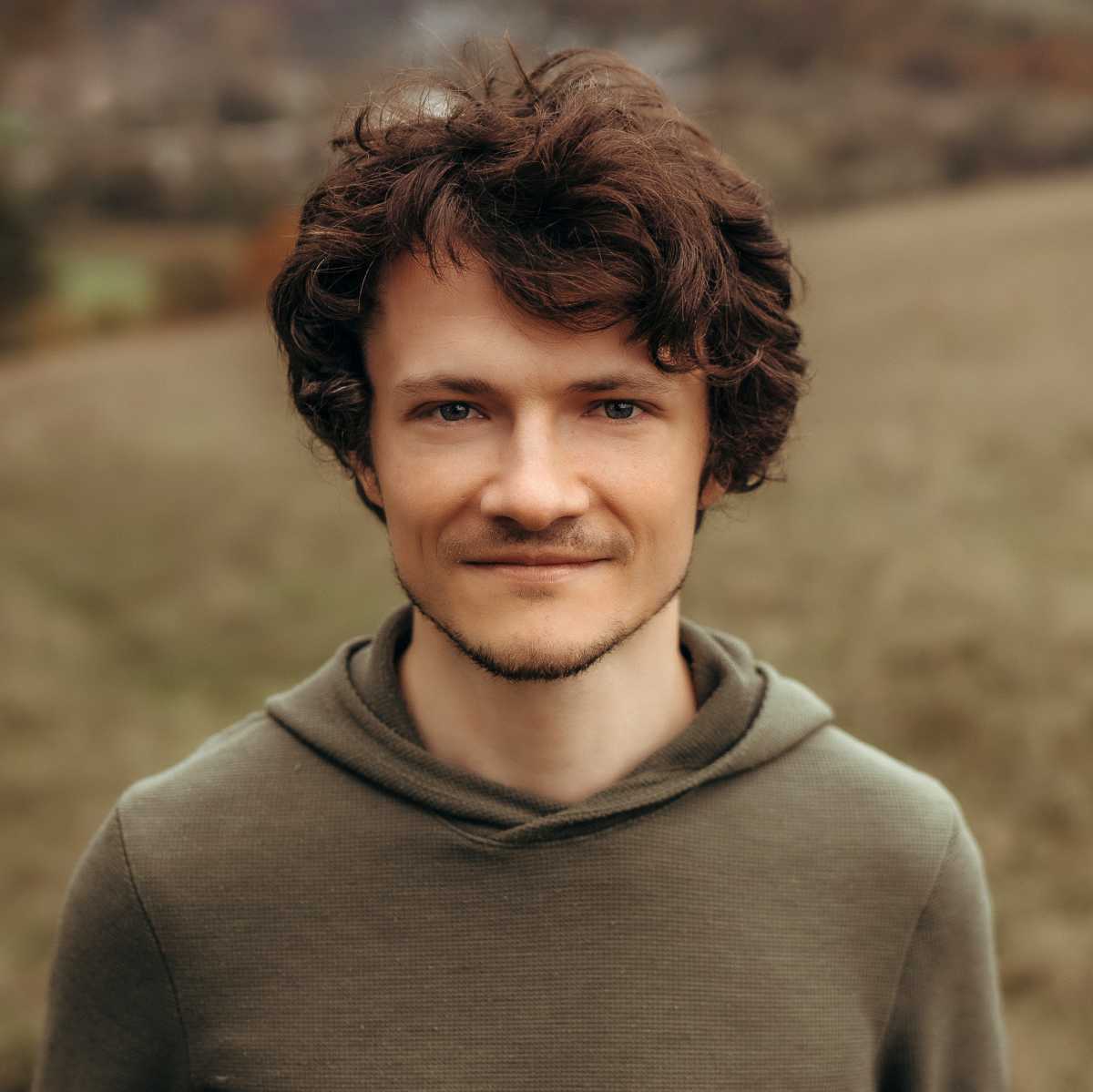
Benjamin Rodenberg
Benjamin Rodenberg is a Research Software Engineer at the German Climate Computing Centre (DKRZ). His work focuses on software for coupled Earth
system models and high-performance computing, with a particular interest in enabling modular and interoperable model components. He is a developer of the YAC library. Within TerraDT, he contributes to the development of generic coupling concepts and software interfaces that support the integration of diverse models into high-resolution Earth system simulations.
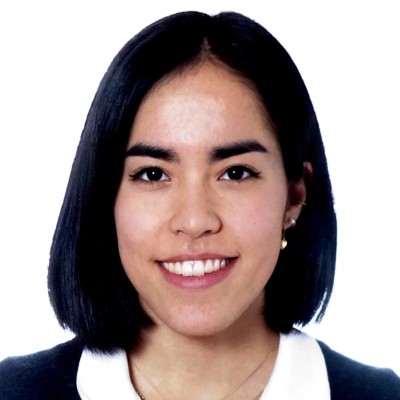
Marina Castano
Marina Castano is a Machine Learning engineer in the Earth Sciences department of the Barcelona Supercomputing Center. She has an undergraduate degree in Mathematics from the University of Salamanca and a master's degree in Data Science from New York University, obtained under a Fulbright scholarship. Her current research focuses on improving the representation of land surface parameters for weather and climate models. She uses computer vision models for semantic segmentation, to produce land use, land cover and leaf area index maps at 1km resolution.

Moritz Hanke
Moritz Hanke is a research software engineer at the German Climate Computing Center (DKRZ). He is the main developer of the YAC (Yet Another Coupler) library, a high-performance coupling framework for Earth system models. His work focuses on high-performance computing, parallel algorithms, scalable coupling software, and scientific software engineering. His research aims to enable efficient data exchange between distributed model components and to improve the performance and scalability of large-scale Earth system simulations.