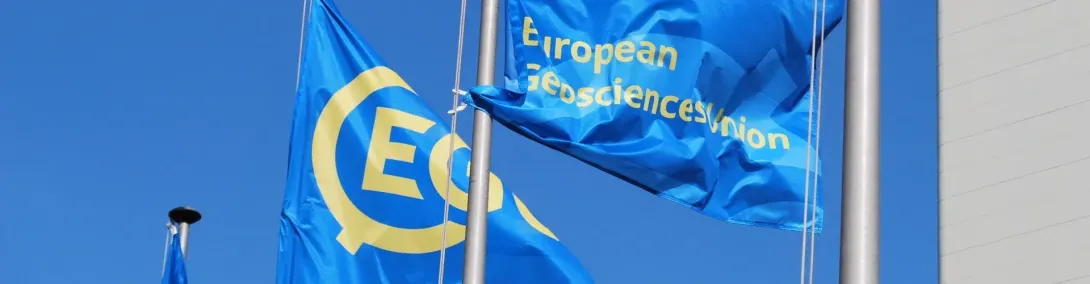
EGU 2026 will bring together scientists from across the Earth, planetary and space sciences to share the latest research, foster collaboration, and explore solutions to pressing environmental challenges. Organised by the European Geosciences Union, the event is one of the largest geoscience conferences worldwide, offering a dynamic programme of scientific sessions, networking opportunities, and interdisciplinary exchange.
The event
Held in Vienna, the EGU General Assembly gathers thousands of researchers, policymakers, and industry representatives. The programme spans a wide range of topics, including climate modelling, cryosphere dynamics, land surface processes, and atmospheric science, core domains that are directly relevant to TerraDT’s work.
Participants can engage through oral and poster sessions, short courses, and panel discussions, making the event a key moment to showcase scientific advances and connect with the broader geoscience community.
Why it matters for TerraDT
Attending EGU2026 is strategically important for TerraDT as it sits at the intersection of climate science, high-performance computing, and digital innovation. The event provides:
- Scientific visibility: an opportunity to present TerraDT’s progress on km-scale climate modelling and digital twin components for the cryosphere, land surface, and aerosols.
- Community engagement: direct interaction with leading researchers and initiatives working on similar challenges within the Destination Earth ecosystem and beyond.
- Feedback and validation: exposure to expert feedback that helps refine models, coupling approaches, and impact tools.
TerraDT’s role
At EGU2026, TerraDT will contribute to discussions on advancing Earth system modelling through interoperable digital twin technologies. See the speakers tab to see which partners will be presenting at the event.
By engaging with the scientific community, the project strengthens its alignment with cutting-edge research and ensures its developments remain relevant, robust, and impactful.
Participation in EGU also supports TerraDT’s broader goal of bridging science and applications—translating complex climate data into actionable insights for decision-makers working on climate adaptation and resilience.
Where to find us
You can find the TerraDT team at the following sessions:
Room D2 on May 5th at 11:05-11:15
Room D2 on May 5th at 14:00–15:45
Inês Girão
Geospatial Analyst at +ATLANTIC (Collaborative Laboratory for the Atlantic Ocean) with a background in geography. In TerraDT, Inês works on connecting km-scale climate simulations with local, city-level applications, helping planners and policymakers understand how climate change affects urban environments (e.g. heat stress, air quality, livability) and how to adapt effectively for a more resilient urban environment.
Devaraju Narayanappa
Technical coordinator of the TerraDT project. Climate scientist and experienced researcher with a demonstrated history of working in the research Institutions. Skilled in Ecosystem-Climate interactions, Climate Change, Mathematical Modeling, Large Data Analysis using Python.